A & I
Our world
The craft behind the cut.
One technique, four design languages, and a couple of things to check with your own hands.

Architecture in Linen · Laser-cut
Girih cutwork
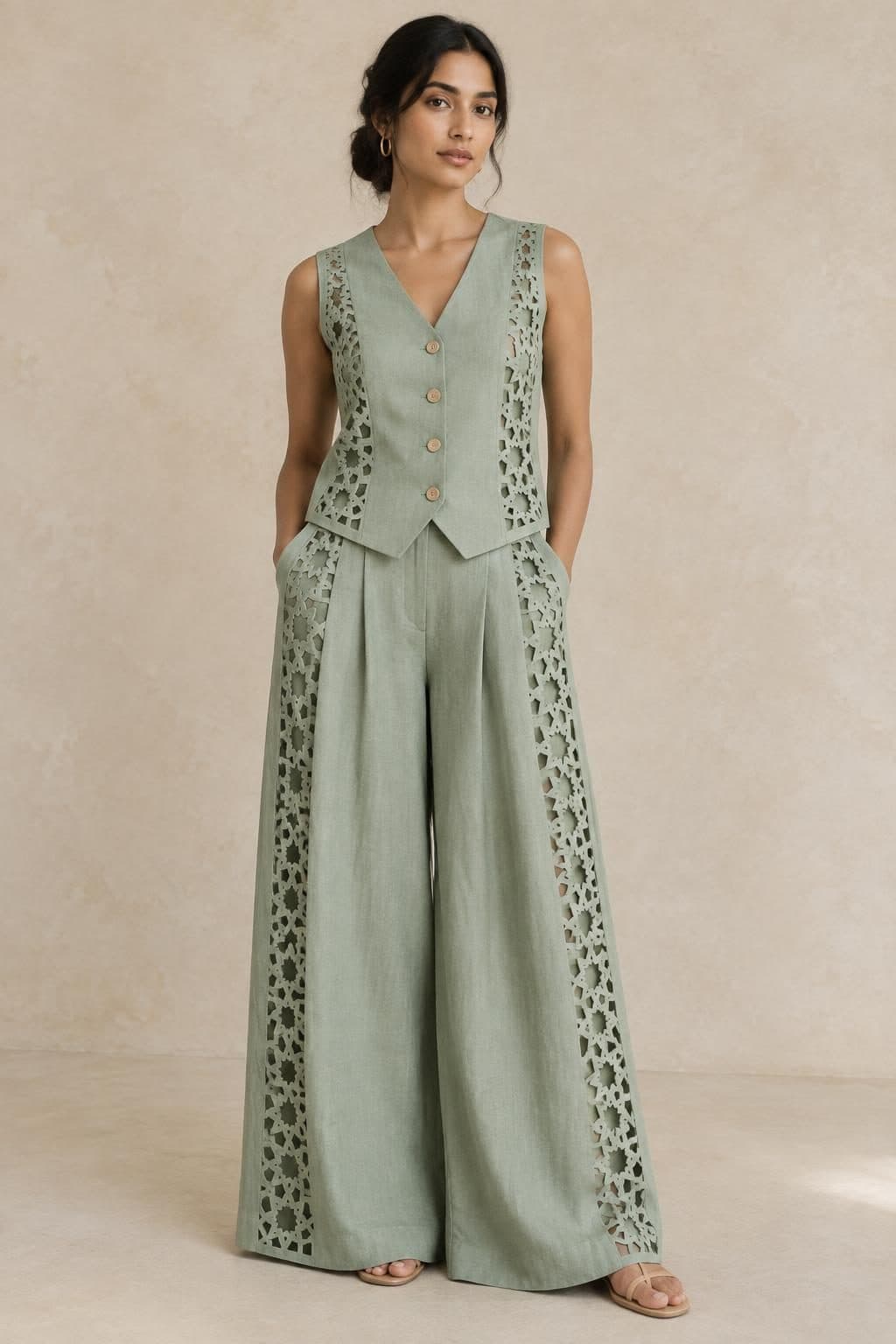
The girih grid — the interlocking star-and-polygon tiling found in centuries-old Islamic tilework — is drawn to each garment's own pattern pieces before a single cut is made, then laser-cut by a specialist craft partner so the geometry stays exact.
How to tell
Look close at the repeat: it's drawn to fit this exact panel, not a stock pattern trimmed to size.
Every piece · Bound by hand
Hand-finished edges
A laser-cut edge in linen would fray without help. Every cut edge is hand-bound once the pattern is cut, so the open geometry holds its shape wear after wear instead of coming apart at the edge.
How to tell
Run a finger along a cut edge — it should feel finished and bound, not raw or fibrous.

Girih · Bauhaus · Moorish muqarnas · Art Nouveau
Four design languages, one technique
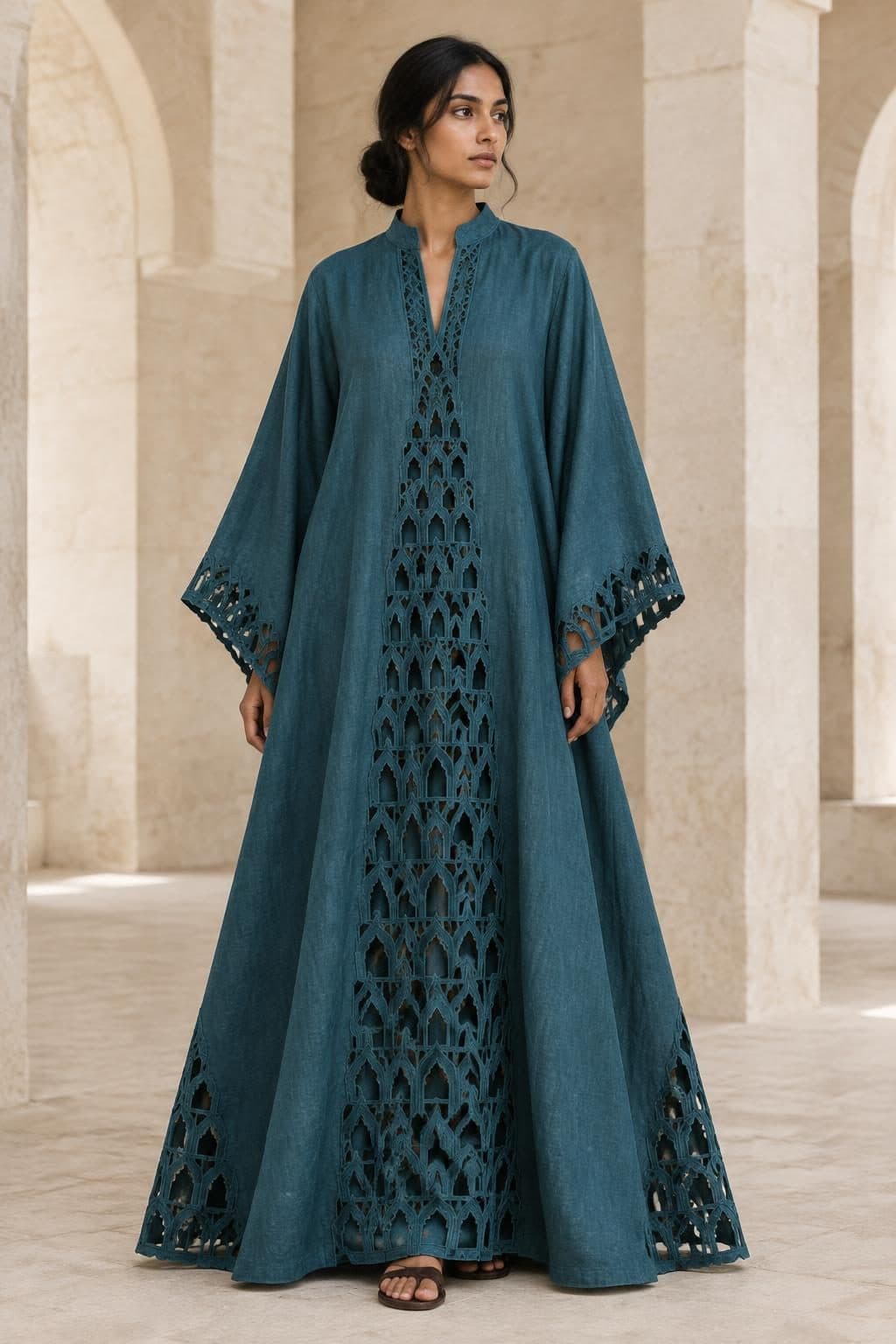
The same laser-cut technique carries four real design traditions across the capsule — Persian girih tiling, the honeycomb muqarnas vaulting of Moorish architecture, Bauhaus's reduction to grid and right angle, and Art Nouveau's flowing vine line work.
How to tell
Compare two pieces side by side — the cut technique is identical, but the geometry it's tracing is different each time.
Then it is finished by hand.
Our finishing team rolls every hem, sets every button and hand-binds every cut edge. The last centimetre decides how a garment falls, so we refuse to give it to a machine.
Read more from the journal